Why Lake Arenal is Costa Rica's Best-Kept Secret for Property Investment
Why Lake Arenal is Costa Rica's Best-Kept Secret for Property Investment
Let us start with a confession. Lake Arenal is not, in any meaningful sense, a secret. The lake itself is on every Costa Rica tourist itinerary. The volcano next door is the country's most photographed natural landmark. Real estate brokers have been using the phrase "best-kept secret" about this region for at least fifteen years, which by definition disqualifies it from the category.
What is true is something more interesting and more useful: Lake Arenal is a fundamentally different real estate market from the Pacific coast properties that dominate Costa Rica's international press. Different climate, different buyer profile, different yield economics, different exit liquidity, different risk profile. If you have been comparing Tamarindo, Nosara, and Manuel Antonio listings against each other, you have been comparing variations on a single market. Lake Arenal is its own thing.
This article walks through what is actually distinct about the Lake Arenal market, what kind of investor it suits, what it does not, and what 2026 data tells us about the trajectory.
The geography is the investment thesis
Costa Rica's geography is unusually compressed. From sea level to over 12,000 feet of elevation can be covered in a 30-mile span, and the country's scientists count roughly twelve distinct climate zones across an area smaller than West Virginia. This is not a trivia point. It means that two properties an hour apart can have radically different climates, weather risk profiles, vegetation, construction requirements, and lifestyles.
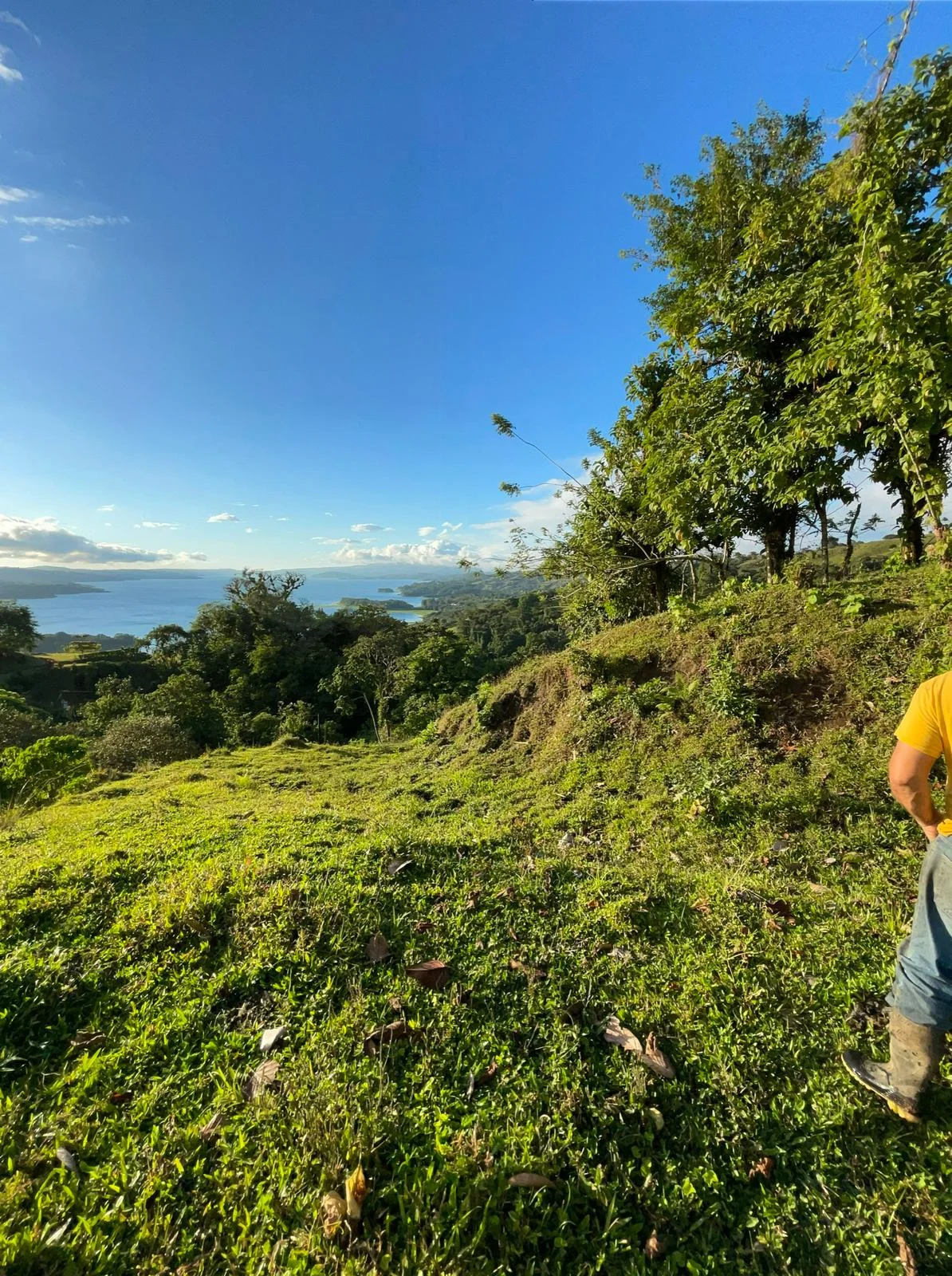
Lake Arenal sits at around 540 meters of elevation in the Tilarán mountain range. Average temperatures stay in the 70–80°F band year-round. Humidity is moderate. Air conditioning is rarely needed. The lake itself moderates temperature swings and creates the trade-wind funnel that makes the western shore one of the world's best windsurfing locations from December through March.
Compare this to the Guanacaste Pacific coast — Tamarindo, Flamingo, Nosara — at sea level. Daytime temperatures regularly exceed 90°F in the dry season. Humidity is high. Air conditioning is mandatory year-round. Properties closer to the beach face accelerated salt-air corrosion of metal, electronics, and pool equipment. These are not subtle differences; they show up in monthly utility bills, annual maintenance budgets, and long-term resale condition.
Lake Arenal's climate is closer to a North American coastal Mediterranean region — Northern California, southern Spain, parts of New Zealand — than to the tropical-beach Costa Rica most travelers picture. For buyers seeking a year-round home rather than a vacation rental, that difference is the entire investment thesis.
The buyer profile is different, and that changes everything
Coastal Pacific markets — particularly Tamarindo and Nosara — are dominated by two buyer types. The first is the high-net-worth vacation home buyer who flies down two or three times a year and rents the property the rest of the year. The second is the dedicated short-term rental investor running the property as a small hospitality business. Both archetypes treat the property primarily as a yield asset.
Lake Arenal attracts a markedly different mix. The buyer here is more often a full-time or part-time resident than a vacation-home owner. The expat community around Nuevo Arenal is built around people who have actually moved here — retirees, location-independent professionals, small-business owners, artists, and a number of remote workers from North America and Europe. The town's population sits around 2,400 and the expat share is meaningful enough that English and German are commonly heard in restaurants and at the weekly market.
This buyer mix has three direct consequences for property economics:
- Lower vacancy is a less central concern. Most Lake Arenal owners are using the property themselves, so a 50% rental occupancy rate is not a financial problem; it is a feature.
- Long-term tenant demand is real. Year-round residency creates demand for 6-month and 12-month rentals, a market segment that barely exists in beach towns dominated by short-term tourism.
- Buyers are slower, more deliberate, and harder to flip to. A property here sells when the right family decides to relocate, not when next month's tourists need a place to stay. That is good for stability and bad for liquidity.
Yield economics: smaller numbers, lower volatility
Coastal Costa Rica vacation rentals can produce striking gross numbers. According to January 2026 Airbnb profitability data, beach-town two-bedroom listings in premium pockets like Hacienda Pinilla command $380–$650 per night during high season. Lake Arenal and inland comparable units in places like Villareal book at $180–$260 per night. The headline gap is real.
What the headline gap obscures is the rest of the income statement. Coastal high-season pricing is a function of tourist concentration during a four-to-five month window; off-season nightly rates often collapse 40–60%. Annual occupancy at popular beach destinations like Tamarindo, Nosara, and Jaco runs 44–51% according to early-2026 market data, meaning a "$500-per-night" property is actually averaging closer to $200–$250 per booked night across the year, with cleaning costs, manager fees, and marketing spend further compressing net.
Lake Arenal's pricing band is narrower year-round. Wind season (December–March) brings a meaningful premium — Western-shore homes near the kiteboarding launches see real demand from a niche but well-heeled European and North American windsurfer market. The August–September window sees families on inland Costa Rica vacations. The relative absence of a true "dead season" matters more than the absence of a high-priced peak.
The carrying-cost side of the ledger is where the difference is starkest. A coastal home with a pool runs annual operating expenses 40–60% higher than a comparable inland home — driven by air conditioning electricity, salt-air maintenance, hurricane-season insurance premiums where applicable, and the cleaning and management overhead of a true short-term rental operation. Lake Arenal homes typically need none of those. Mountain breezes do the cooling, the lake does not corrode metal, and lower transient turnover means lower management costs.
Liquidity and exit: the real tradeoff
Honest analysis requires admitting where Lake Arenal is harder than coastal markets, not easier.
The Lake Arenal real estate market is smaller and less liquid. Coastal Guanacaste sees enough volume that the average days-on-market for single-family homes is now around 340 days as of early 2026 — already long by U.S. standards. Lake Arenal's effective average is longer than that, often 12 to 24 months for properties priced at the upper end of their local segment. There simply are fewer buyers in the funnel.
This has two practical implications for any investment thesis:
First, you should plan for a hold period of at least 7–10 years if you are treating the property as an investment, not a residence. Anything shorter risks being caught between buying at one price and being unable to exit at a higher one fast enough to outrun transaction costs. Costa Rica's 15% capital gains tax on profit makes short hold periods particularly inefficient unless the property has appreciated meaningfully.
Second, pricing discipline matters more than in coastal markets. A coastal Tamarindo property listed 10% above market will eventually find a tourist-flow buyer or vacation-rental investor who needs inventory by a specific date. A Lake Arenal property listed 10% above market will sit, sometimes for years. Sellers here close 5–10% below asking on average per Coldwell Banker's December 2025 report, and properties stale for more than a year often trade 20–30% below original list. Buy with the eventual sale in mind: a property that fits a clear, well-defined buyer profile sells; a property that fits no one in particular does not.
"Properties that have been listed more than a year often close 20–30% lower than their original price." — Coldwell Banker Costa Rica market report, December 2025. Lake Arenal magnifies this dynamic: the buyer pool is small enough that a poorly priced listing can quietly age out of relevance.
What kind of investor Lake Arenal actually suits
Putting the geography, climate, buyer mix, yield profile, and liquidity profile together produces a fairly specific investor archetype that does well in this market — and a clear list of investor archetypes that should look elsewhere.
| Investor profile | Lake Arenal fit | Why |
|---|---|---|
| Pre-retiree planning a 5–10 year transition to part-time residency | Excellent | Climate suits year-round occupancy; long hold matches market liquidity; rental income covers carry while you transition |
| Remote worker seeking a primary residence with optional rental | Excellent | Reliable internet in Nuevo Arenal/Tilarán, expat community for social density, low operating costs |
| Multi-generational family vacation home | Strong | Year-round usable; activities (windsurfing, hiking, hot springs, fishing) appeal to all ages; lower seasonality than coast |
| Pure short-term-rental yield investor with no plan to use the property | Weak | Coastal markets produce stronger gross yields if AC, maintenance, and management costs are accepted; Lake Arenal's strength is in different buyer dynamics |
| Short-horizon (3–5 year) flip investor | Avoid | Liquidity is too thin; transaction costs and capital gains tax eat short-hold profit unless market has moved meaningfully |
Three concrete risks worth pricing in
Generic real estate articles tend to skip the risk discussion. Here are the three risks specific to Lake Arenal that experienced buyers actually flag:
Wind exposure. The same trade winds that make the lake a windsurfing destination from December through March make some properties genuinely unpleasant to live in during those months. A poorly oriented home on the western shore will rattle, leak air, and accumulate dust at a level that surprises North American buyers who only visited in green season. Walk the property in February before committing.
Water source variability. Lake Arenal sits in mountainous terrain; some properties draw from AyA municipal water, others from rural community-managed ASADAs, others from private wells or spring-fed cisterns. Reliability and transferability differ dramatically. Verify the water source before any earnest-money payment, and ask the question in writing.
Smaller emergency-services radius. The nearest full hospital is in Liberia (about 90 minutes by car) or San Jose (3 hours). The Tilarán clinic handles routine and urgent care well, but anything requiring a specialist or surgery means a transfer. For active retirees in their 50s and 60s this is rarely a problem; for buyers in their 70s and 80s it is a factor that argues for proximity to Tilarán proper rather than remote lake-edge plots.
The 2026 setup
If you wrote off Lake Arenal during the 2021–2023 Costa Rica price surge because you assumed all prices had inflated equally, the 2026 picture is worth a fresh look. Inventory is up roughly 15% across most regions versus 2024, and properties that have been listed for over a year are negotiating 20–30% below original ask. The lake region in particular saw less of the speculative price runup than coastal Guanacaste did, partly because its buyer pool is more residence-driven and less momentum-driven.
Costa Rica's national real estate market entered 2026 in clearly buyer-favorable territory. Coldwell Banker Vesta Group's March 2025 update reported single-family home days-on-market at 376 nationally, up 32% year-over-year, with active listings up 14.9% in the same window. Negotiating leverage has moved firmly to buyers in most segments. For someone with a multi-year horizon, this is the most workable buyer's environment in roughly a decade.
Questions worth asking before committing
If you read all of the above and are still interested, the productive next questions are not about pricing.
- Why this property, not the next twelve like it? Lake Arenal has more inventory than buyers right now; you can be selective. Specific orientation, water source, and access road quality matter more than asking price.
- Who is the eventual buyer when I sell in 8–12 years? If you cannot describe that buyer specifically — their age, circumstances, what they will be looking for — the property may not have a clear exit narrative.
- What does my honest residency timeline look like? If you intend to live in the property eventually but residency paperwork is years away, structure the buy around that timeline, not against it.
- Can I afford to be wrong about timing? Lake Arenal rewards patient capital; it punishes capital that needs a quick exit.
- Have I walked it in green season? If the answer is no, you have not actually evaluated the property yet, regardless of how much time you have spent in dry-season showings.
The "best-kept secret" framing is marketing language. The honest reframe — that Lake Arenal is a structurally different real estate market with a specific buyer profile, specific risks, and specific advantages — is what makes the region a genuine consideration for the right kind of investor and a poor fit for a wrong one. Knowing which you are is the only analysis that matters.
Sources
- Costa Rica's 12 Microclimates — The Oasis at Puket
- Lake Arenal — Wikipedia
- Expat and Local Community Around Lake Arenal — Lake Arenal Living
- Airbnb Profitability Analysis in Costa Rica (January 2026) — TheLatinvestor
- Guanacaste Real Estate Market Analysis 2026 — TheLatinvestor
- Costa Rica Capital Gains Rates — PwC Tax Summaries
- Coldwell Banker Costa Rica — December 2025 Report
- AyA — Costa Rica National Water Utility
- Costa Rica Real Estate Market Update March 2025 — Dominical Realty