The Real Cost of Living Near Lake Arenal in 2026
The Real Cost of Living Near Lake Arenal in 2026
Cost of living articles about Costa Rica fall into two failure modes. The first is wildly optimistic — quoting $1,200 monthly budgets that imply you will live in a thatched-roof cabin and never visit a restaurant. The second is wildly pessimistic — quoting $5,000 monthly budgets that assume you import everything and refuse to learn Spanish. The truth, as usual, is in between, and it depends heavily on where in Costa Rica you live and how willing you are to participate in the local economy.
This article focuses specifically on Lake Arenal — a different cost structure from coastal Tamarindo, from urban San José, and from southern Pacific zones like Dominical. The numbers are current to early 2026 and assume an expat couple, full-time, in a comfortable but not extravagant lifestyle. Your mileage will vary.
The headline number
Per Senderos CR's 2026 cost of living guide and triangulated against several other current sources, the realistic monthly budget for a couple in the Lake Arenal area as of 2026 is $2,200 to $3,000 for a comfortable middle-class lifestyle. Below $2,200 is achievable but starts requiring real budget discipline. Above $3,000 begins to be discretionary — restaurant dining, travel, imported wines, and the like.
For comparison: that same couple in Tamarindo or Nosara would need roughly $3,000–$4,500 to reach the same comfort level. In San José or Escazú, $2,800–$3,500. The Lake Arenal advantage is real but modest, and it manifests primarily in housing, utilities, and food costs — not in a sweeping discount across every category.
Housing — the biggest single line
If you own your home outright, this category collapses to property tax, insurance, and maintenance. If you rent, it dominates the budget.
Rental rates in Nuevo Arenal and the surrounding lake region as of early 2026:
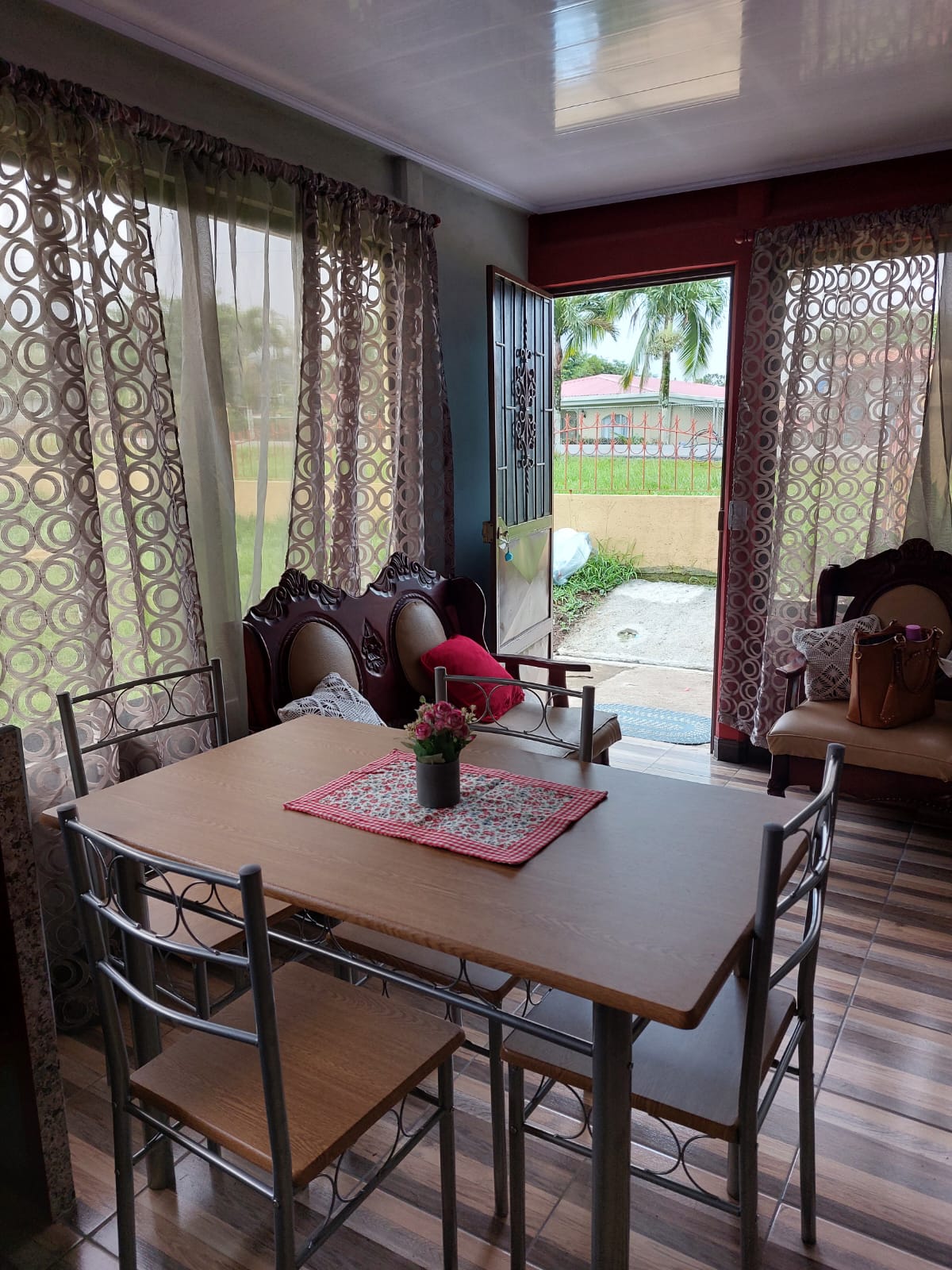
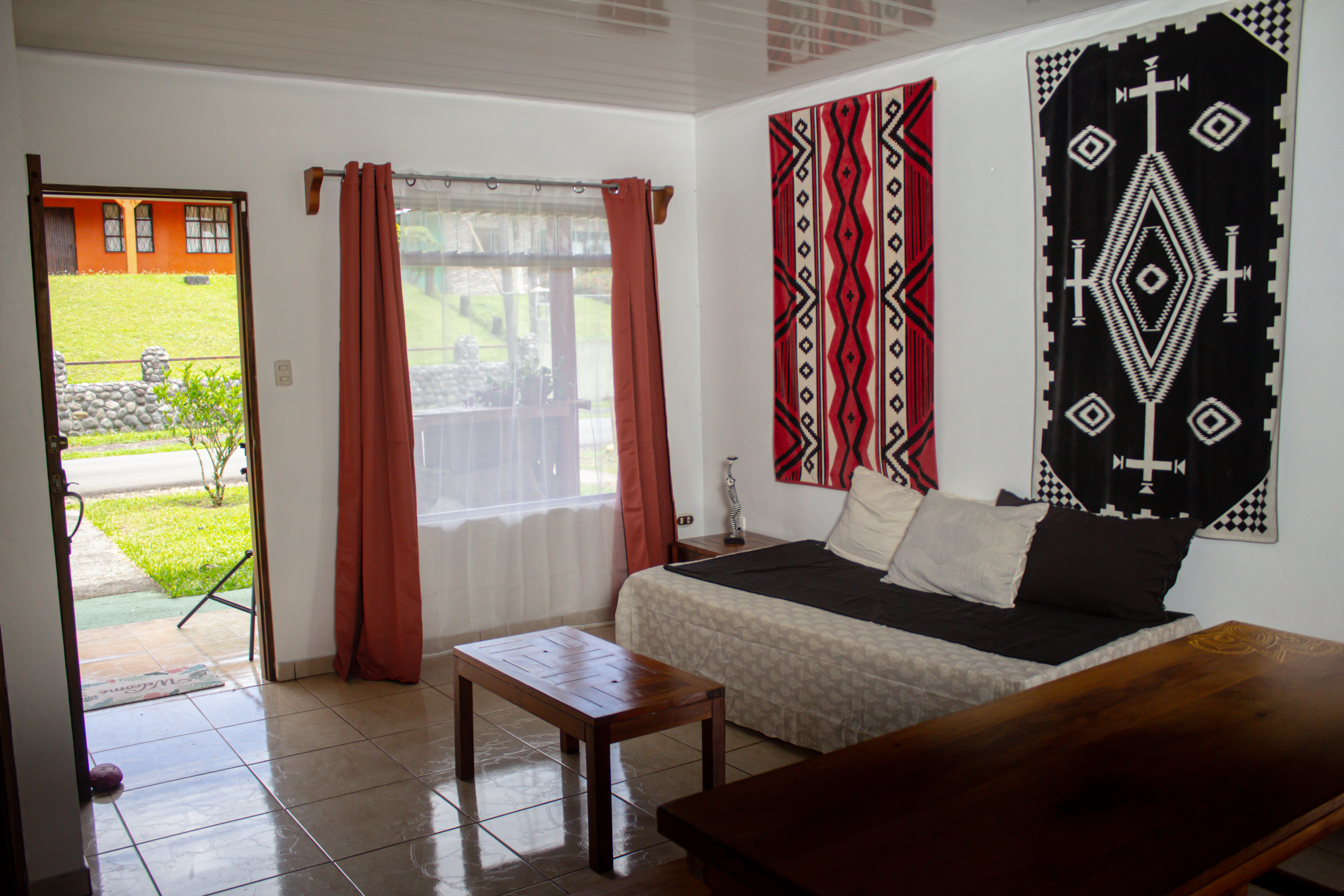
- Modest 1–2 bedroom local-style homes: $500–$800 per month, often with garden space. Lower-end is usually unfurnished and inland.
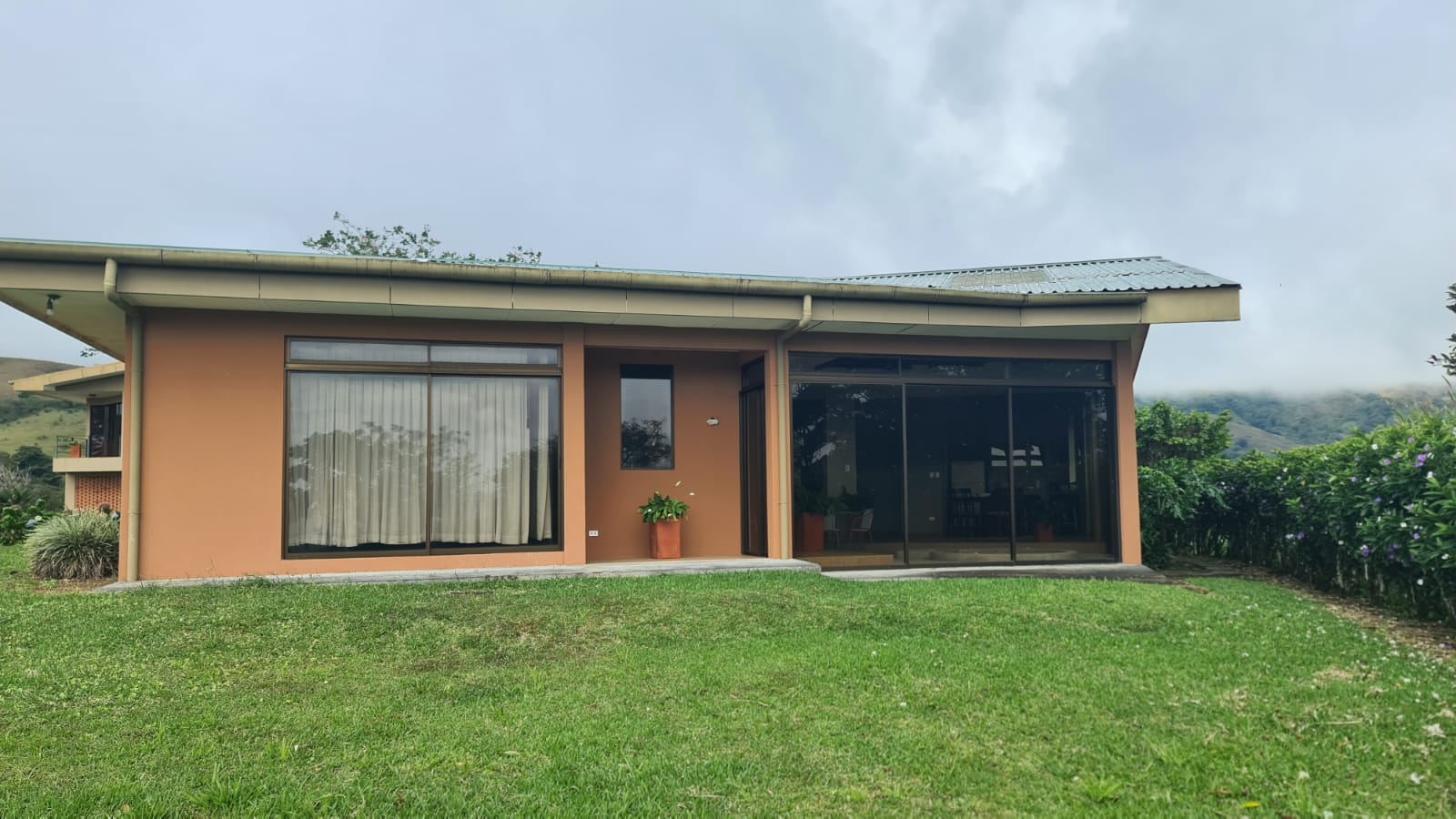
- Comfortable 2–3 bedroom expat-style homes with lake views: $800–$1,500 per month furnished.
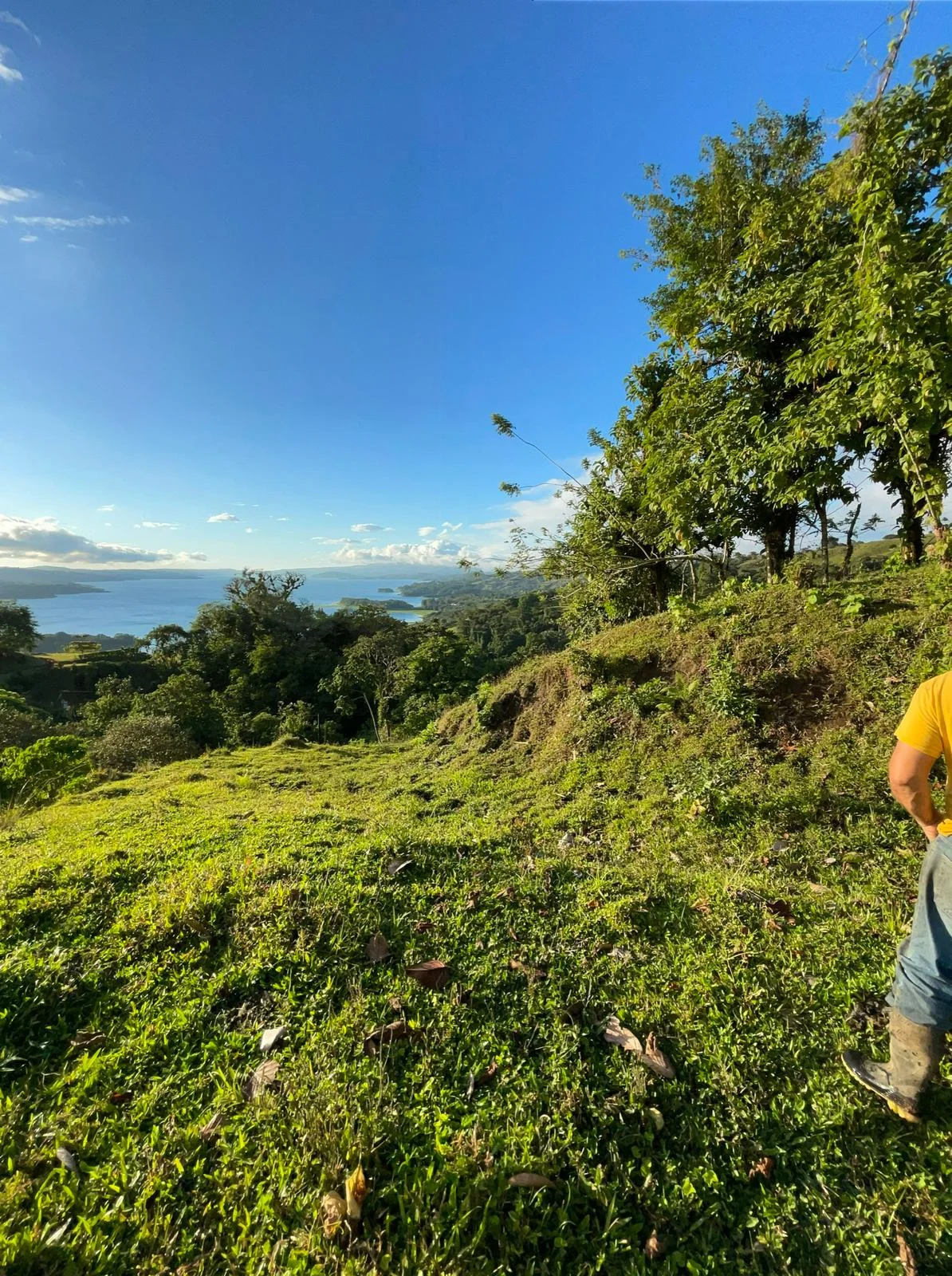
- Higher-end lake-view homes with amenities (pool, modern construction, prime aspect): $1,500–$2,500 per month.
- Premium lakefront homes: $2,500–$5,000+ per month, scarce and usually rented to vacationers rather than long-term residents.
Long-term annual leases offer roughly 30–40% discount versus monthly tourist rates. Negotiating directly with owners — rather than through agencies — saves another 10–15%. The Facebook expat groups (LOLA, Living Lake Arenal, Lake Arenal Community) regularly have rental listings posted directly by owners.
Food and groceries
The Lake Arenal area has two parallel food economies, and almost everyone shops both.
Local economy. The Sunday feria in Tilarán is the regional farmers' market. A couple can fill their refrigerator for the week for roughly $40–$50 in fresh produce, eggs, cheese, and small quantities of fish or meat. Tropical fruits — papayas, pineapples, plantains, guavas, mangoes in season — cost a fraction of North American prices. Local rice, black beans, fresh tortillas, and chicken are inexpensive and excellent. Most expats who have lived here a year build their meal planning around the feria.
Imported and supermarket economy. Pali (the discount supermarket), MaxiPali, and the regional Supermercado in Nuevo Arenal carry imported goods — wine, cheese, breakfast cereals, snack foods, household products. Prices on imported items run 30–80% above U.S. equivalents because of the 13% VAT and import duties. A small bottle of decent wine that costs $12 in California is $20 here. A box of breakfast cereal that costs $4 in Toronto is $7. The cumulative effect adds up if you eat primarily an imported diet.
Realistic monthly grocery budget for a couple eating a mix of local and some imported foods: $400–$600. A couple eating primarily local food: $250–$350. A couple eating primarily imported and prepared foods: $700–$900.
Utilities
The Lake Arenal climate is the single biggest utility advantage versus coastal Costa Rica. Air conditioning is rarely needed at lake elevation; heating is never needed. This pulls the electricity bill down dramatically compared to the Pacific coast.
| Utility | Typical monthly cost | Notes |
|---|---|---|
| Electricity (no AC) | $45–$95 | Vs. $200–$400 on coast with AC. ICE rates ~$0.12–$0.18/kWh. |
| Water (AyA or ASADA) | $15–$35 | Lower if you have private well |
| Internet (fiber 100 Mbps) | $50–$80 | Kolbi or Liberty; bundles with cable TV available |
| Mobile phone (per person) | $15–$25 | Kolbi or Claro prepaid |
| Gas (cooking, occasional water heater) | $10–$30 | Bottled propane, refilled by route delivery |
Total monthly utilities for a typical lake-area home: $135–$265, often closer to the lower end. This is one of the categories where Lake Arenal genuinely costs less than coastal Costa Rica.
Healthcare
Healthcare costs in Costa Rica work very differently from U.S. healthcare and require a brief explanation.
Costa Rica has a public single-payer system called Caja Costarricense de Seguro Social (CCSS). Legal residents must contribute, with premiums calculated as 7–11% of declared monthly income. For a retiree declaring $2,000 per month in pension income, that translates to roughly $140–$220 per month for full Caja coverage. Coverage is comprehensive — primary care, specialists, emergency care, hospitalization, prescriptions, surgery — at no further out-of-pocket cost.
Most expats supplement Caja with private services for specific cases where the public system has long waits or where they want to choose their own provider. International Insurance's 2026 retiree guide notes that a standard private doctor's visit in Costa Rica costs $60–$75, specialist consultations $100, and diagnostic tests under $100. Private hospitals (CIMA, Clinica Biblica, Hospital Metropolitano) provide North American-quality care at 30–50% of U.S. prices.
Practical implication: a typical retiree couple might budget $300–$500 per month for the combination of mandatory Caja contributions plus occasional private care. This is dramatically less than U.S. healthcare costs and somewhat less than Canadian out-of-pocket healthcare expenses, depending on the province.
The Lake Arenal-specific consideration: the regional public hospital is in Liberia, 90 minutes away. The local Tilarán public clinic and a couple of private clinics handle routine and urgent care. Anything specialized requires a transfer. Buyers in their 70s and 80s with chronic specialist relationships often choose to live closer to Liberia or San José for this reason.
Transportation
If you live in the Lake Arenal area, you need a vehicle. Walking and public transit work for in-town errands but not for the broader life patterns most expats adopt — visits to Liberia airport, San José for shopping or cultural events, day trips to the coast, regular runs to specialty stores.
Vehicle ownership cost components:
- Used 4WD SUV (recommended for unpaved roads): $15,000–$30,000 purchase, ongoing depreciation roughly $1,500/year for a vehicle held 5–7 years.
- Marchamo (annual circulation tax): roughly 2.5% of vehicle's officially appraised value. For a $20,000 vehicle: $400–$500/year.
- Mandatory insurance (SOA): ~$60/year for the bare minimum.
- Comprehensive insurance: $300–$700/year depending on vehicle and coverage.
- Fuel: gasoline runs roughly $1.20–$1.30 per liter as of early 2026. A typical expat couple drives 800–1,200 km/month, costing $80–$130 in fuel.
- Annual Riteve safety inspection: $25.
- Maintenance: $300–$1,000/year depending on vehicle age and condition.
Total ongoing monthly transportation cost for a single-vehicle household: $150–$300 after the vehicle is purchased.
Recreation, dining, and discretionary
This is where lifestyle choices show up most. A typical couple's recreation and dining budget breaks down as:
- Restaurant dining: $20–$40 for a typical sit-down dinner for two with a beer or glass of wine. A high-end Nuevo Arenal restaurant runs $50–$80 for two. Most couples eat out 1–3 times a week, so this category lands at $100–$400/month.
- Yoga, fitness, classes: $30–$60/month for unlimited yoga or pickleball memberships. Many residents trade activities (you teach my kids guitar, I drive your gardener home) and never pay cash.
- Domestic travel: weekend trips to Pacific beaches, Caribbean side, San José cultural events. Plan on $200–$500 for a typical 3-night couple's trip.
- Hot springs, lake activities, hiking permits: $20–$50 per outing, weekly or biweekly.
- Books, hobbies, gifts, miscellaneous: $50–$200/month.
Realistic discretionary budget: $400–$800/month depending on how socially active you are.
Putting it together: a realistic monthly budget
| Category | Modest | Comfortable | Generous |
|---|---|---|---|
| Housing (rent or owner carry costs) | $700 | $1,000 | $1,800 |
| Groceries | $300 | $450 | $700 |
| Utilities | $140 | $190 | $260 |
| Healthcare (Caja + private) | $200 | $350 | $550 |
| Transportation | $160 | $220 | $320 |
| Recreation + discretionary | $300 | $500 | $900 |
| Travel + emergencies | $150 | $250 | $400 |
| Monthly total | $1,950 | $2,960 | $4,930 |
The "comfortable" column matches what people who have actually lived here for several years describe spending. The "modest" column is achievable for couples committed to the local economy and small-scale lifestyle. The "generous" column reflects an expat life with frequent travel, North American food preferences, and active discretionary spending.
Some retired couples live well on $2,000 per month and even better on $2,500 to $3,000 — including housing, transportation, medical care, utilities, food, and entertainment. — International Living, 2026 cost of living estimate. Lake Arenal sits comfortably within this band.
What changes the math
Two things move the budget significantly above these baselines:
Property purchase financing. If you are paying a North American mortgage on a property you intend to use part-time, that mortgage payment dominates the math regardless of local costs. Most full-time Lake Arenal expats either rent locally or own outright; the leveraged-vacation-home math rarely works.
Children. The local public schools are competent but Spanish-only. English-language private schools mean either commuting to Liberia (90 minutes each way) or homeschooling. Both have meaningful cost and lifestyle implications. Most Lake Arenal expat households are couples without school-age children at home; that is a structural feature of the demographic.
Two things move the budget significantly below the baselines:
Living closer to the local economy. Couples who shop primarily at the feria, eat at sodas (small local restaurants serving casados for $5–$8), drive an inexpensive vehicle, and adopt the rhythm of small-town Costa Rica live very comfortably on $1,500–$1,800 per month. This is the lifestyle most long-tenured Costa Rican expats describe; it requires Spanish proficiency and a willingness to integrate.
Owning rather than renting. Once a home is owned outright, the housing line drops to roughly $500–$800/month for property tax, insurance, and maintenance combined. Most retirees aim toward this position within 2–3 years of relocating.
How to think about this if you are planning
The realistic financial planning frame for a Lake Arenal relocation is not the headline monthly budget but the cumulative annual cost-to-replace your current lifestyle, adjusted for Costa Rican specifics. For most North American couples in their 60s, the math works out at roughly 40–60% of their pre-relocation costs in the United States or Canada, with healthcare being the single biggest category of savings.
That said, the real benefit of Lake Arenal is not financial. The cost differential is real and meaningful, but couples who relocate purely for the cost arbitrage often leave within two years, frustrated by the things money does not buy here. The couples who stay are the ones who came for the climate, the pace, the community, the simplicity — and accept the cost benefit as a pleasant side effect rather than the primary driver.
Sources
- Cost of Living in Costa Rica 2026 Complete Guide — Senderos CR
- Cost of Living in Costa Rica 2026 Guide for Expats — International Insurance
- Retiring in Costa Rica 2026 — International Insurance
- Cost of Living in Costa Rica — International Living
- Money Needed to Retire in Costa Rica 2026 — TheLatinvestor
- Cost of Living in Costa Rica April 2026 — Numbeo
- CCSS — Caja Costarricense de Seguro Social