Building Your Dream Home at Lake Arenal: A Practical Guide
Building Your Dream Home at Lake Arenal: A Practical Guide
Building from scratch at Lake Arenal is a different undertaking from buying an existing home and very different from building in North America. The site conditions are specific, the regulatory process is layered, the construction calendar has hard climate constraints, and the cost structure has surprises that catch first-time buyers regardless of how much homework they have done. This guide walks through what the process actually looks like in 2026 — who you need on your team, what the permit sequence is, what construction costs you should plan for, and what the time-honest schedule from "I want to build" to "I have keys" looks like.
Decide first whether to build at all
Most buyers who are thinking about building should first seriously consider buying an existing home and renovating. The reasons are practical, not aesthetic:
- The Lake Arenal market currently has more inventory than buyers, including a meaningful number of well-built homes that simply need updating. Buying and renovating is faster and usually cheaper.
- Coordinating a build remotely from North America while juggling residency paperwork, language barriers, and contractor schedules is a meaningful project-management commitment.
- Costa Rican construction timelines are honest — measured in months, not weeks — and your imagined schedule will slip. Plan on 12 to 18 months from breaking ground to move-in.
- The first build a buyer does in Costa Rica almost always teaches them that they would have done the second build differently. Many experienced expats recommend renovating first, building second.
If you have read those four points and still want to build, the rest of this article is for you. There are good reasons to build — exact site selection, exact orientation, exact layout, latest building science — and Lake Arenal has the climate and the lot inventory to make custom construction work. The key is going in with realistic expectations.
Your team: four roles, not one
North American buyers often arrive expecting to hire "a builder" and let them handle everything. That is not how Costa Rica's residential construction industry is structured. You will likely have four distinct relationships:
Architect or engineer (CFIA-licensed). Required by law. CFIA — the Federated College of Engineers and Architects — registers all construction professionals. Your architect or engineer designs the home, stamps the plans, submits permits, and supervises construction phases. Expect to pay 4–8% of total construction cost for design and supervision.
Tramitador. A specialist who shepherds permits through the municipality, CFIA, AyA (water utility), and SETENA (environmental). Some architects include this service; many work with an external tramitador. A good tramitador can compress the permit timeline by 30–40% versus an inexperienced one. Cost: typically a few hundred dollars to $2,000 depending on complexity.
General contractor. The party who actually builds the house. Lake Arenal has perhaps a dozen contractors with strong reputations, mostly from word-of-mouth in the expat community. The contractor selection is the single highest-leverage decision you make in the project — more than the architect, more than the lot.
Project manager (sometimes optional). If you are building from abroad and cannot be on-site twice a month, hire a separate project manager who works for you, not for the contractor. They visit the site weekly, photograph progress, flag issues early, and communicate in your time zone. This role adds maybe $5,000–$15,000 to a build but routinely saves multiples of that in misunderstood specifications and unnoticed shortcuts.
The permit sequence
Costa Rica's permitting process for new residential construction has multiple agencies in series. The current sequence as of 2026:
- CFIA review. Your stamped plans go to CFIA for technical review and registration. Typical timeline: 2–6 weeks.
- SETENA environmental viability (if required). Required for properties on slopes, near water, or in protected zones — most Lake Arenal lots qualify in some category. Timeline: 2–4 months for a residential D2 application; longer for D1 categories with full environmental impact study.
- AyA water connection approval. Required to confirm water source for the new home. Timeline: 2–8 weeks depending on whether the property has existing AyA service or needs new connection.
- Municipal building permit (Tilarán municipality). The final permit, granted after CFIA, SETENA (if applicable), and AyA approvals. The municipality assesses a construction tax of 1% of the estimated build value. Timeline: 3–8 weeks once prerequisite approvals are in.
Total elapsed time from submitting design to municipal permit in hand: typically 3–6 months for straightforward residential projects, 6–10 months for complex ones. Lake Arenal sits in the middle of this range — Tilarán's municipality is reasonably efficient, but slope and environmental requirements add steps for many lots.
Construction cost in 2026
Costa Rican residential construction costs scale predictably by quality tier. Per architecture.cr's July 2026 cost analysis, the bands are:
| Quality tier | Cost per m² | What you get |
|---|---|---|
| Standard / minimum acceptable | $1,028–$1,300 | Reinforced concrete-block construction, ceramic tile, basic windows, simple finishes |
| Mid-quality | $1,300–$1,800 | Better windows (often double-pane), ceramic or porcelain floors, granite countertops, quality wood doors, decent insulation |
| High-end | $1,800–$2,050 | Porcelain floors throughout, quartz countertops, hardwood feature areas, premium windows and fixtures, advanced systems |
| Luxury / custom architectural | $2,050–$2,500+ | Imported materials, custom millwork, glass walls, complex roof geometry, smart-home integration |
For a typical 250 m² (2,700 sq ft) Lake Arenal lake-view home in mid-quality finish, plan on roughly $325,000–$450,000 in construction cost alone, plus 10–15% for the site preparation, road access work, and septic system that lake-region lots usually need beyond standard urban builds.
Hidden costs that catch first-time builders:
- Imported materials are taxed at roughly 28% in import duties plus 13% VAT. Specifying imported finishes — German-made windows, Italian tile, U.S. appliances — adds 40%+ to the line items they appear on. The locally available alternatives are often quite good and avoid this; verify before specifying.
- Utility connections vary wildly. A property with an existing AyA water meter on a paved road might pay $400–$800 for the connection. A remote property requiring a private well, pump system, and pressure tank can run $5,000–$15,000. Verify in advance.
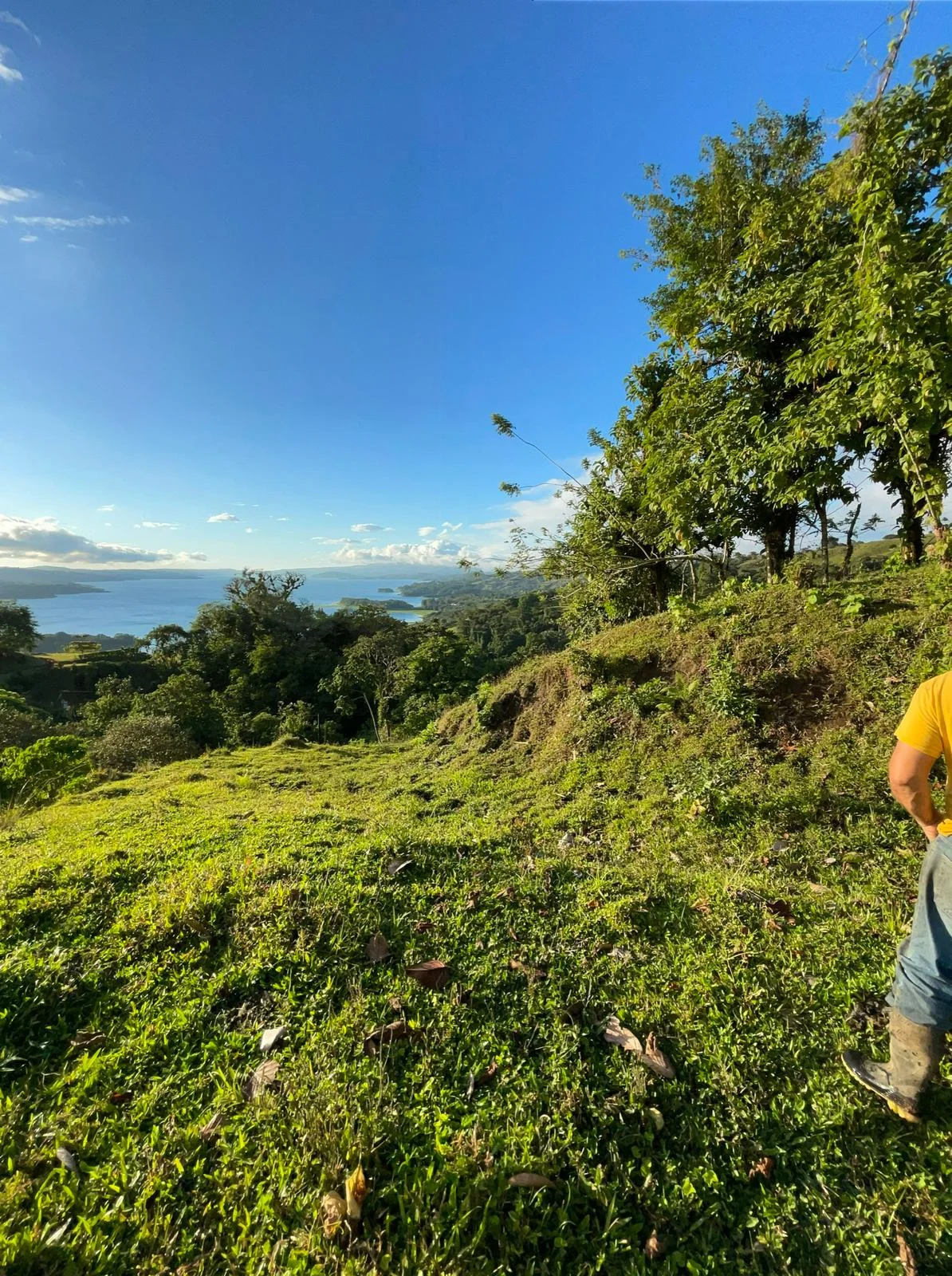
- Site preparation on slope. Most Lake Arenal lake-view lots require terracing, retaining walls, and engineered drainage. Allow 8–15% of the build cost for site work alone — sometimes more on steep parcels.
- Construction loan financing is uncommon and expensive. Most buyers fund builds from cash or home-country loans. Local construction financing exists but rates and approval requirements make it unattractive for most foreigners.
- Contingency buffer. Plan on 10–15% above your contract price for changes, unforeseen site conditions, and end-of-project finishing decisions. Builders who tell you no contingency is needed are not the builders you want.
The honest schedule
The schedule below is conservative — it represents what successful builds actually take, not what marketing literature promises.
| Phase | Duration | Notes |
|---|---|---|
| Architect engagement → design complete | 2–4 months | Includes site visits, schematic, design development, construction drawings |
| Permit submission → all approvals in hand | 3–6 months | CFIA + SETENA + AyA + municipality. Slope/environmental adds time |
| Contractor selection + contract signing | 1–2 months | Get three competitive bids; verify references; do not skip this |
| Site prep + foundation | 1–2 months | Slope, drainage, septic — often the most variable phase |
| Structure + roof | 3–5 months | Concrete-block construction is methodical |
| Mechanical + electrical + plumbing rough-in | 1–2 months | Often overlaps with structural finish |
| Finishes + cabinets + fixtures | 2–4 months | Custom millwork is a common slip point |
| Punch list + move-in prep | 2–4 weeks | Always longer than expected |
Total realistic schedule: 14–22 months from first architect meeting to moving in. Best-case scenarios run shorter; complex builds, owner-driven changes, and material delays push the high end further. Plan on something in the middle.
Climate and the calendar trap
Lake Arenal's distinct seasons make construction calendar timing more important than it would be in a less weather-defined climate. The honest rules:
- Foundations and concrete pours are best between January and April. Crews can pour in green season, but rain delays add weeks. Schedule the first pour for January or February if possible.
- Roofing and exterior finish work want dry weather. An aggressive contractor will push these into August–September; a smart contractor times them for March–May.
- Interior work continues year-round. Once the building is dried in, finishes proceed regardless of weather.
- The wind season matters more than people think. Western-shore properties with December–March winds at 25+ knots need exterior work — particularly trim, paint, and waterproofing — finished before wind season starts.
Practical translation: the ideal sequence is to close the lot purchase in summer, complete design and permits through fall, break ground in January, and target move-in roughly 12 months later in early winter when the dry season is just resuming. Buyers who break ground in May or June are committing to a more difficult build.
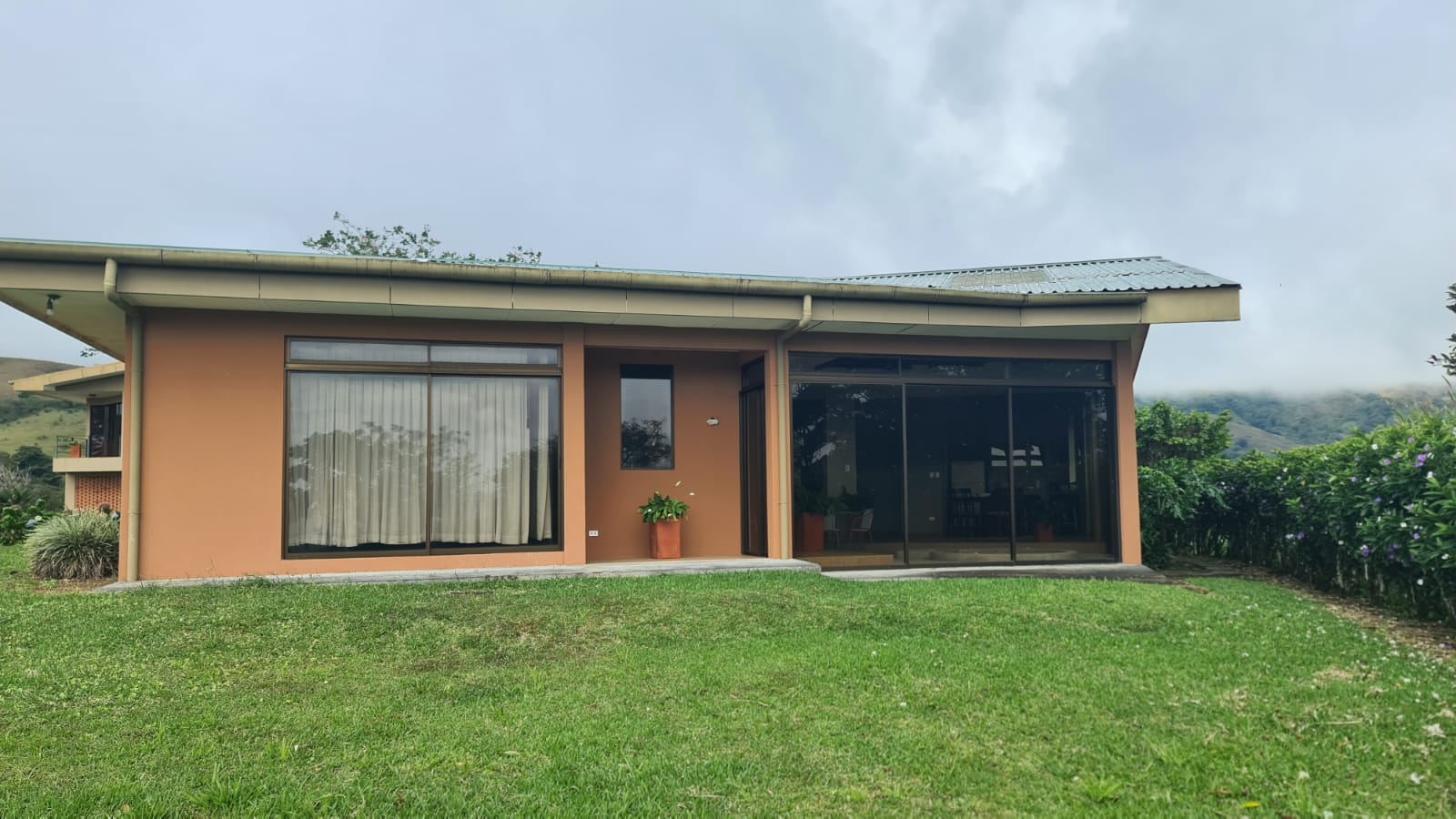
Reinforced concrete block is the dominant residential construction method in Costa Rica — steel-reinforced concrete foundation, concrete-block walls, reinforced columns and beams. This affects everything from your building budget timeline to how the home feels in the wind, the cost of changes mid-build, and the long-term maintenance picture.
Practical advice from people who have done this
The two most common pieces of advice from expats who have completed Lake Arenal builds:
"Hire the architect for supervision, not just design." The temptation is to save 1–2% of project cost by skipping the architect's supervision phase. The downstream cost of unsupervised execution typically dwarfs the savings. The architect catches issues weekly that you and the contractor would not.
"Be in Costa Rica for the foundation, the structural close-in, and the finishing month." Three on-site visits is the practical minimum. A foundation pour is not the moment to rely on photos. Structural close-in is the last chance to catch dimensional errors before they get covered. The final finishing month is where careful supervision pays for itself many times.
Common mistakes to avoid
- Underestimating slope and drainage. Most North American buyers underestimate how much work a Lake Arenal lot needs before construction can begin. Budget the site work as a separate line item, not a nuisance.
- Importing high-end finishes you could source locally. The 28% import duty plus 13% VAT compounds quickly. Work with your architect on locally available alternatives. The result is usually nearly as good and dramatically cheaper.
- Hiring the cheapest bid without verification. Lake Arenal has both excellent and mediocre contractors. Reference checks with three previous clients — including one whose project finished at least two years ago — are non-negotiable.
- Making changes late. Mid-construction changes cost 2–4x what they would have during design. The discipline is to spend more time on design and finalize specifications before signing the construction contract.
- Not budgeting for the soft costs. Architect, tramitador, surveyor, attorney, project manager, plus the 1% municipal construction tax and the contingency buffer. Together these can add 12–20% to the construction price on the contract.
Building at Lake Arenal works well for buyers who treat it as a year-long project, hire a full team, accept the seasonal calendar constraints, and budget honestly. It frustrates buyers who treat it as a North American suburban build with a different time zone. Both outcomes are common, and the difference is almost entirely in expectations.
Sources
- Construction Permits Costa Rica 2026: CFIA, SETENA & Municipalities — Century 21
- The Real Price of Building a House in Costa Rica 2026 — architecture.cr
- Build vs Buy in Costa Rica 2026 — Century 21
- How To Build A House In Costa Rica — Quatro Legal
- Build Your Costa Rica Home 2026 — Coldwell Banker
- CFIA — Costa Rican College of Engineers and Architects
- SETENA — Costa Rica Environmental Authority